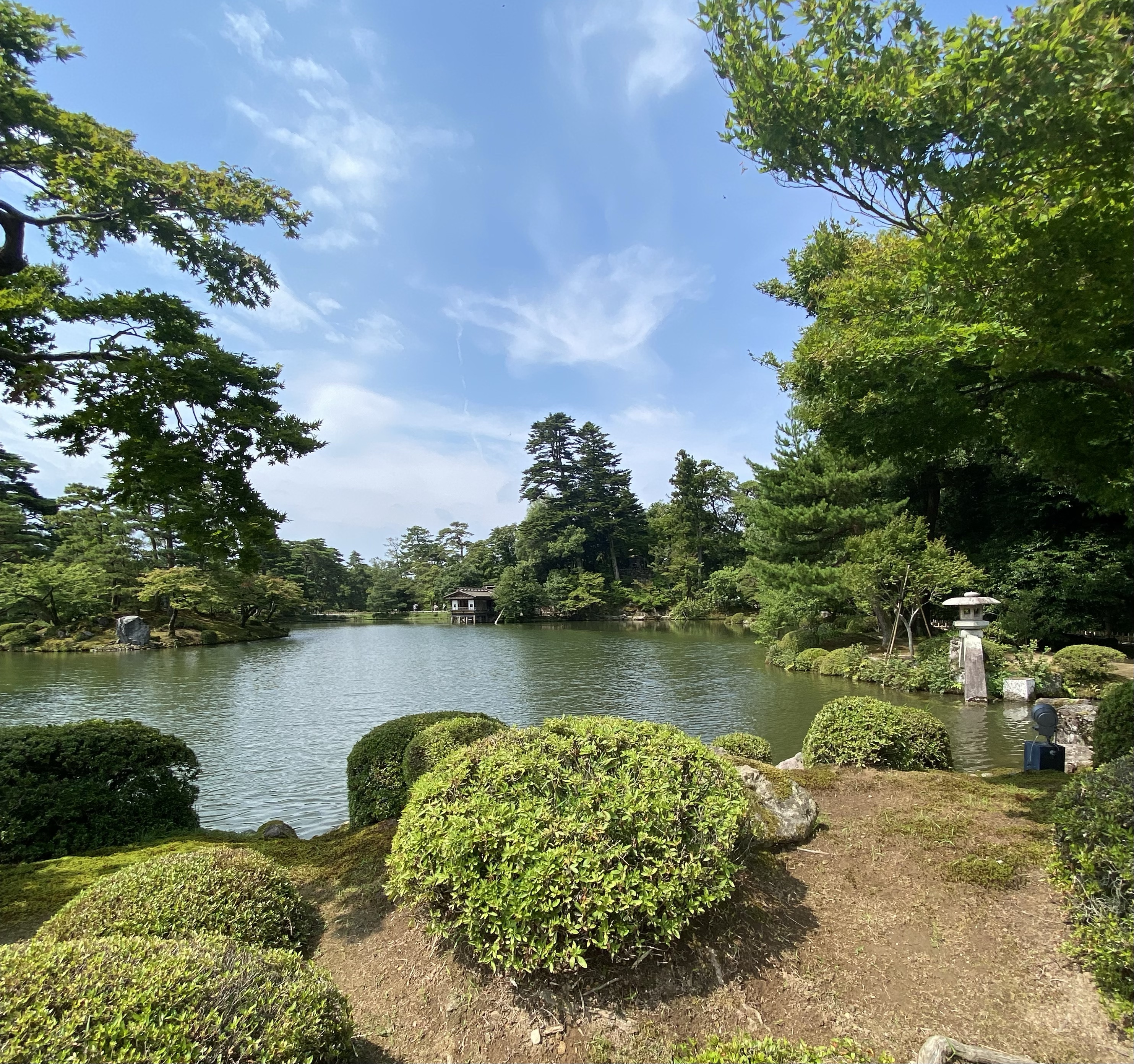
About Kenrokuen Garden
Kenrokuen garden is one of the most famous gardens in Japan. It is located in the heart of Kanazawa city, Ishikawa Prefecture. Construction began in 1676 with a landscape garden called Renchitei. Over the next three centuries, the ruling Maeda family of the feudal Kaga Domain (present day Ishikawa & Toyama regions) maintained and developed the garden. The grounds used to be the outer garden of Kanazawa Castle. In 1822, the garden received its current name Kenrokuen. The once private garden opened to the public in 1874.
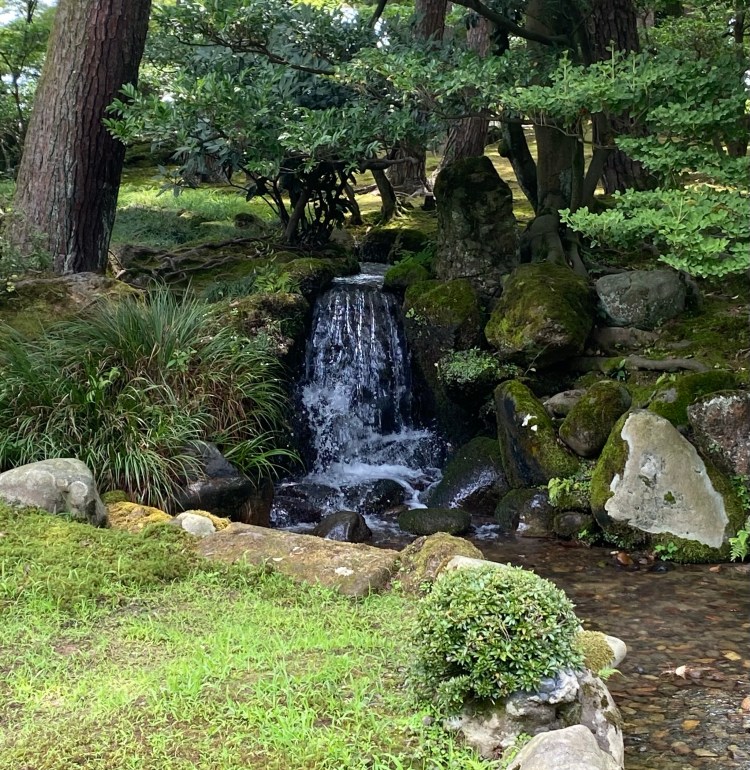
Kenrokuen translates to “a garden that combines six qualities”. These qualities include spaciousness, seclusion, artificiality, antiquity, abundant water, and broad views. It is said that the perfect garden contains all six of these qualities. The garden was designed and constructed with these qualities in mind. The beautiful gardens features include ponds, stone lanterns, waterfalls, stone paths, bridges, streams, tea houses, and artificial hills.
Kenrokuen Garden in addition to Korakuen Garden in Okayama Prefecture and Kairakuen Garden in Ibaraki Prefecture make up the Three Great Gardens of Japan.
Kenrokuen Garden is a true year round attraction in Japan.
9 Key Features of Kenrokuen Garden

Kotojitoro Lantern: Is the iconic symbol of Kenrokuen Garden. Its over two meters tall and is unique for its two legs instead of one. A picture on Nijibashi Bridge with Kotojitoro Lantern and Kasumigaike Pond in the background is very popular.

Gankobashi Bridge: Is known as the flying geese bridge for its “V” shaped design.
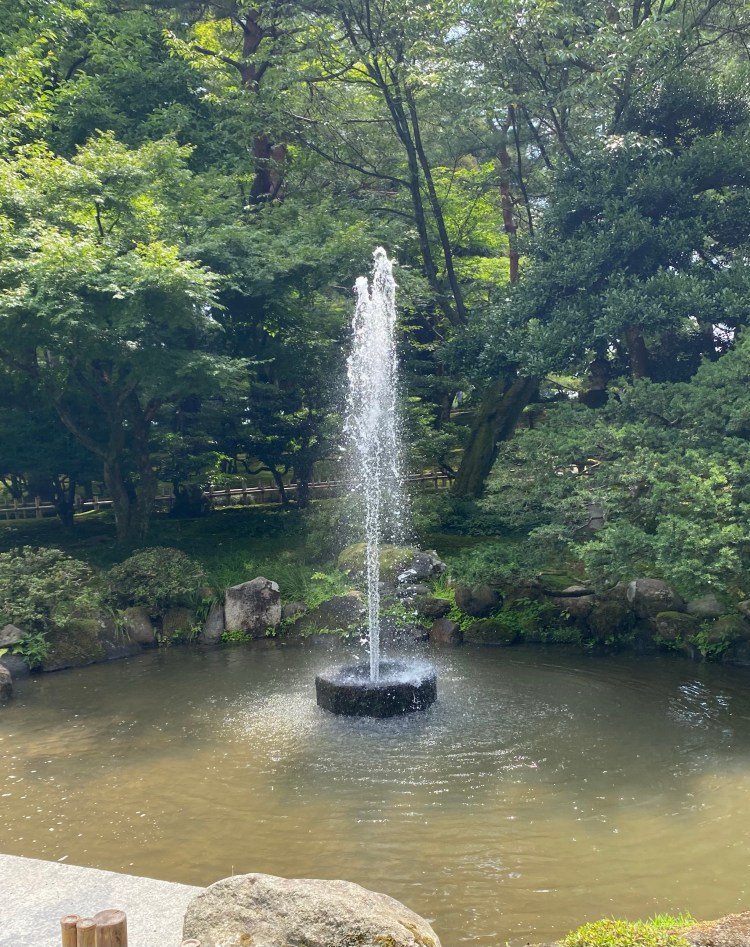
The landscape garden has a number of water features, including Japan’s oldest fountain. The natural water pressure from Kasumigaike Pond powers the fountain and shoots water 3.5 meters in the air.
Karasaki Pine: Is one of the most prominent trees in Kenrokuen Garden. Supports prop up the trees branches over Kasumigaike Pond.
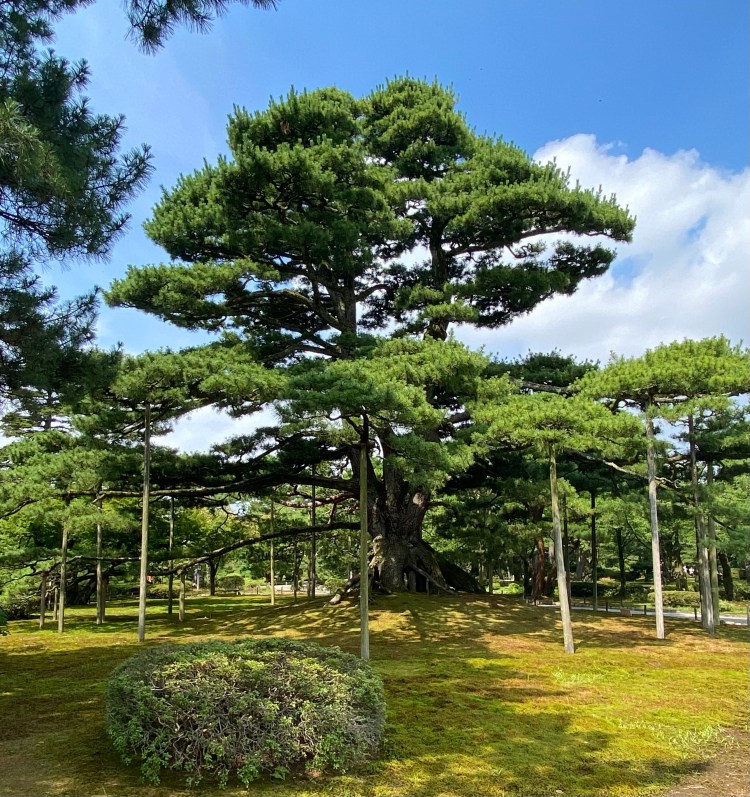
Neagari Pine: Is one of the many old trees in Kenrokuen Garden. It’s name means “Raised Roots Pine” as it was originally planted on a small mound. Over time, the mound was removed and tree truck appears to be suspended above the ground.
Yugao Tei Tea House: Built in 1774, it is located near Hisagoike pond and is the oldest building in the garden.
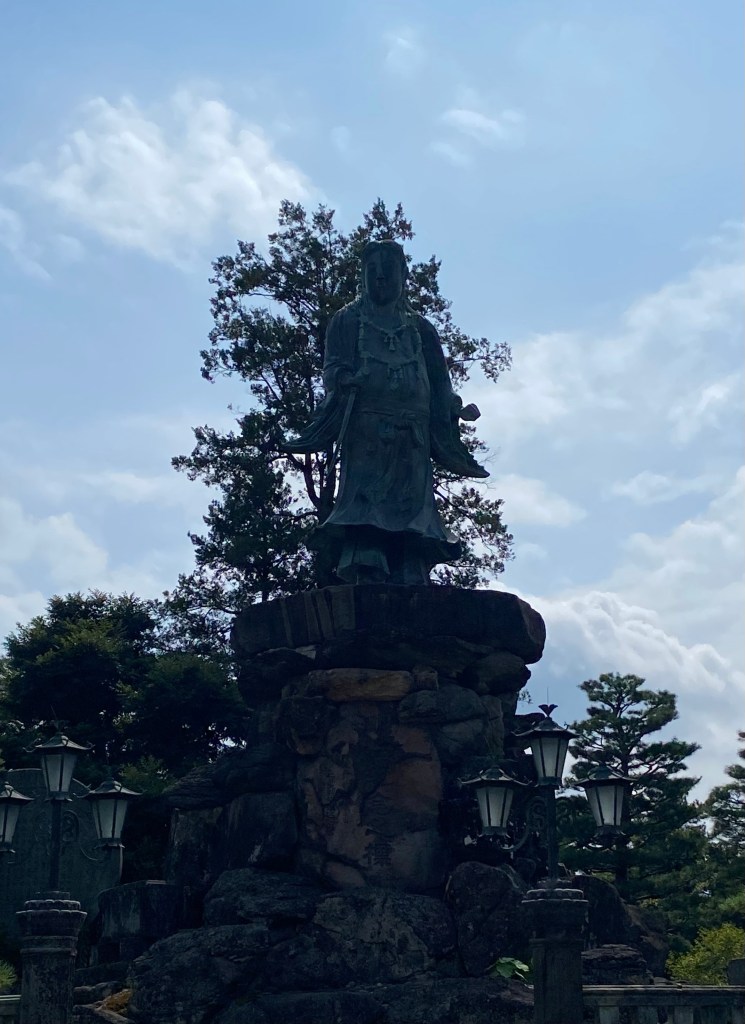
Meiji Monument: The monument depicts Yamato Takeru no Mikoto a legendary figure from Japanese mythology. It was built in 1880 to remember the soldiers from Ishikawa Prefecture who died suppressing a rebellion in Kyushu.
Uchihashi Tei Tea House: A unique tea house that sits over Kasumigaike Pond. It now now serves lite refreshments and provides a unique perspective of the garden.
Yamazaki Hill: Located in the eastern portion of the garden, it is the best place to enjoy the autumn leaves.
Yukitsuri: In the winter, the gardens pine trees are wrapped with yukitsuri which means “snow hanging” in English. The yukitsuri is a series of ropes that form a beautiful conical array. The yukitsuri attach to the branches to prevent heavy snowfalls from damaging them.
Nearby Attractions in Kanazawa City Include: Kanazawa Castle, 21st Century Museum, Ishikawa Prefectural Museum, Ishikawa Prefectural Museum of Traditional Arts, Higashi Chaya District, and Seisonkaku Villa
The Best Times To Visit Kenrokuen Garden
- Mid February – Late March: Plum Blossoms
- Mid April: Cherry Blossoms
- Mid November – Early December: Autumn Leaves
Mid February – Late March: Plum Blossoms
From Mid February – Late March the plum trees in the southern portion of the garden are in bloom.
Mid April: Cherry Blossoms
In Mid April the cherry trees of Kenrokuen are in full bloom. One of the best viewing spots is Hanami Bashi which translates to Flower Viewing Bridge.
Mid November – Early December: Autumn Leaves
From Mid November – Early December the cherry and maple trees of Yamazaki Hill turn beautiful hues of red, orange, and yellow.
Unique Reasons to Go
- One of Japan’s Three Great Gardens
- #1 Sightseeing Attraction in Ishikawa Prefecture
- Kotojitoro Lantern’s Unique Two-Legged Design
- Yukitsuri in winter
Admission Fee & Hours

Kenroku en Main Garden Admission Fee
¥320/Adult, ¥100/Children
Free admission periods:
- March 1st – March 31st: Before 5:00
- April 1st – August 31st: Before 4:00
- September 1st – October 31st: Before 5:00
- November 1st – February 28th/29th: Before 6:00
*Only the Renchi-Mon & Zuishinzaka Entrances are open. Must leave 15 minutes before opening hours.
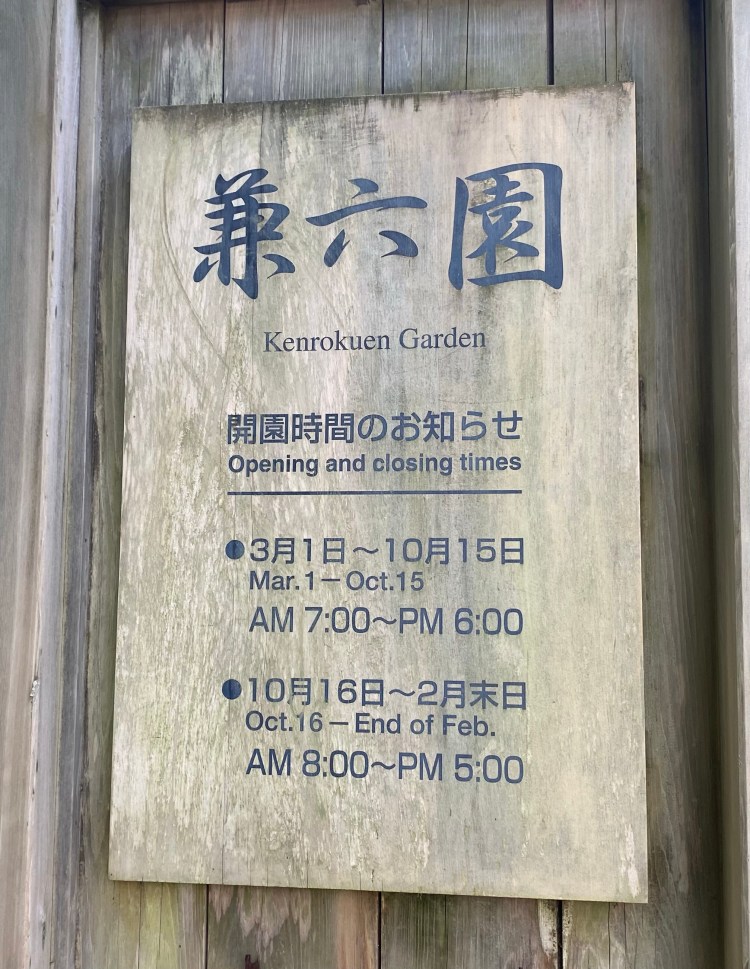
Kenroku en Main Garden Hours
March 1st – October 15th : 7:00 ~ 18:00
October 16th – February 28th/29th : 8:00 ~ 17:00
No Holidays
Shigure-Tei Tea House Hours
9:00 ~ 16:30 (last entry at 16:00)
Closed: December 29th – January 3rd
How To Get To Kenroku en Garden
By Public Transportation
- From Tokyo (Ueno Station) take a JR Hokuriku Shinkansen Hakutaka bound for Kanazawa Station. *Quickest (3 hours, ¥14,170 one way per person) Note: JR Pass Compatible
- From Tokyo (Ueno Station) take a Tohoku Express Bus bound for Kanazawa getting off at JR Kanazawa Station *Least Expensive (Night Bus)(8 hours 57 minutes, ¥5,500 one way per person)
- From Kanazawa Station head towards the Kenrokuen Exit (East Exit):Green Bus: #10, #11, #12, #16Yellow Bus: #90, #92, #94, #95, #97Get off at “Kenrokuen Garden・Kanzawa Castle Park” (兼六園下・金沢城) (Hokuriku Tetsudo Bus)*Consider a Kanazawa Loop Bus Ticket which provides unlimited rides and hits the major sightseeing stops in the city. (¥600/Adults, ¥300/Children) Can be purchased at the Hokutetsu Bus Ticket Office or Transportation Information Counter
By Car
- Suzumi IC (2.3 km East)
- Wakunami IC (4.7 km South)
- Higashinagae IC (4.9 km Northeast)
- Kanazawa Higashi IC (6.4 km North)
- Kanazawa Nishi IC (6.9 km West)
Best Kenroku en Parking Lots
- Ishikawaken Kenroku Parking Lot (480 Spaces, 280m from Katsurazaka Entrance, 24 hours, ¥350 for 1st hour, ¥150/every additional 30 min, Best for Kenrokuen Garden & Kanazawa Castle Park) *Closest Parking Lot to Kenrokuen Garden
- Meitetsukyoshopakingu Kanazawakenrokuzaka (11 Spaces, 450 m from Katsurazaka Entrance, ¥100/hour (Max ¥500/day Mon-Fri (7:00 – 19:00)), ¥100/30 min (Max ¥600/day Sat-Sun (7:00 – 19:00)), Best for Kenrokuen Garden & Kanazawa Castle Park)
- Ishikawaken Seikinenshiinokigeihinkanchika Parking Lot (95 Spaces, 400m from Mayumizaka Entrance, ¥350 for 1st 30 min, ¥150/every additional 30 min, Best for Kenrokuen Garden, Kanazawa Castle Park, & 21st Century Museum of Contemporary Art)
- Ishikawaken Ishibiki Parking Lot (403 Spaces, 600m from Kodatsuno Entrance, 24 hours, ¥100/every 30 min for 1st hour, ¥100/every additional hour, Best for Kenrokuen Garden & Ishikawa Prefectural History & Art Museums)
7 thoughts on “Best Times to Visit Kenrokuen Garden”