
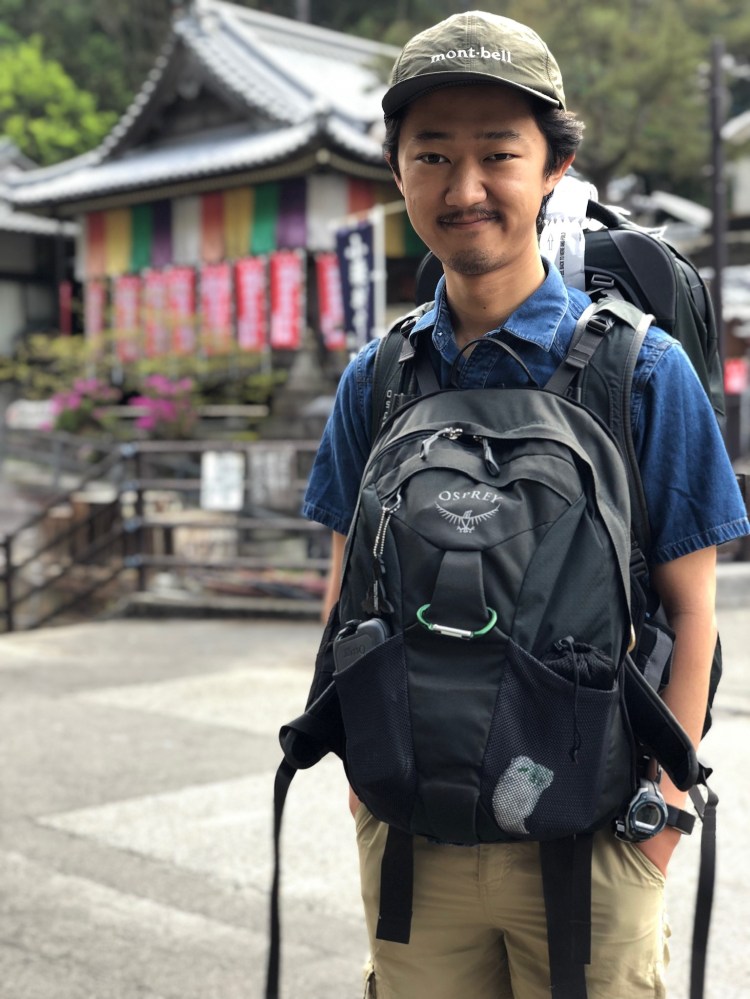

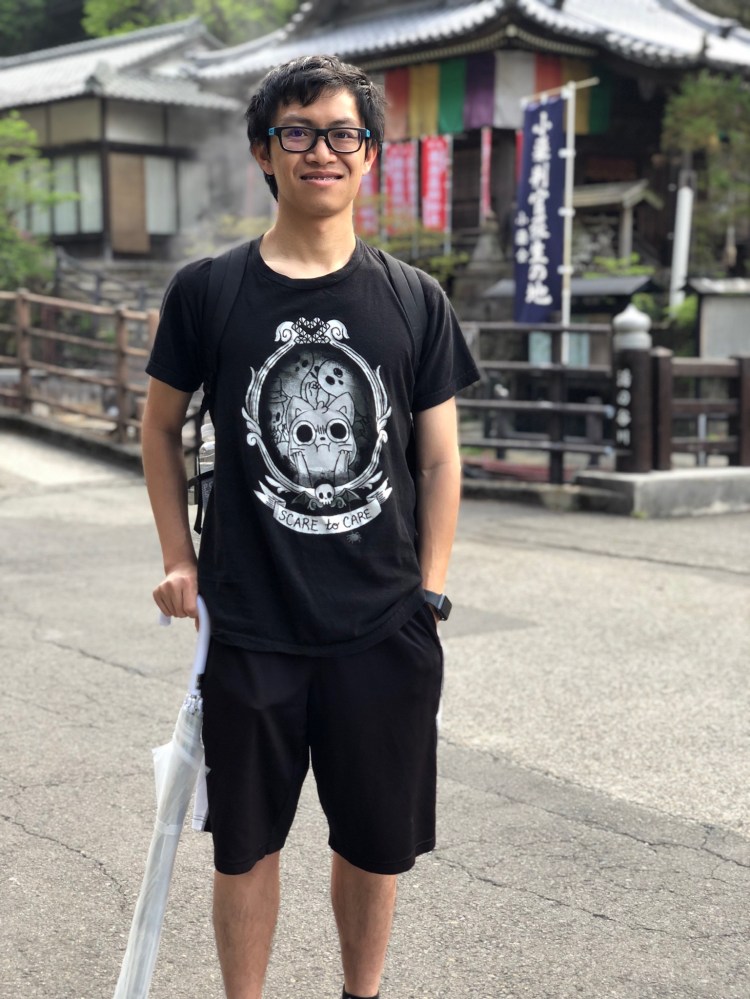
I’ll be the first to acknowledge that this was a transition travel day and did not include any actual hiking. Due to time constraints we had to cut our journey short. Sometime in the future we would like to continue on the Nakahechi Route and visit Kumano Hayatama Taisha and Kumano Nachi Taisha.
For our departure, we opted to not retrace our steps by taking a bus back to Kii-Tanabe Station or Shingu (which is on the eastern coast of the Kii Peninsula). Instead we decided to take a bus up the spine of the peninsula. We took a #302 Bus at 7:03 am bound for Gojo Station in Nara Prefecture. This was a 4+ hour bus ride and at ¥3,400/person is was a bit pricy. However, we thought of it as a four hour scenic bus tour. Fun Fact: This bus route is the longest public bus route in all of Japan.

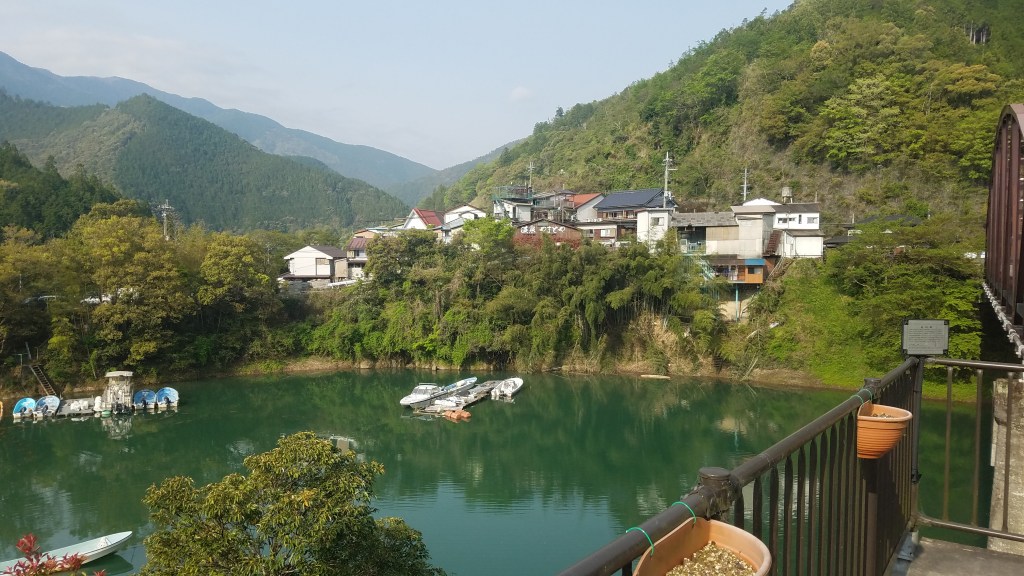
About an hour in we stopped briefly at the Totsukawa Onsen Bus Terminal. We were able to take a quick bathroom break and get a quick look around. Next time if we could spare a few more days it would have been nice to visit a few of these villages nestled between the mountains and river.
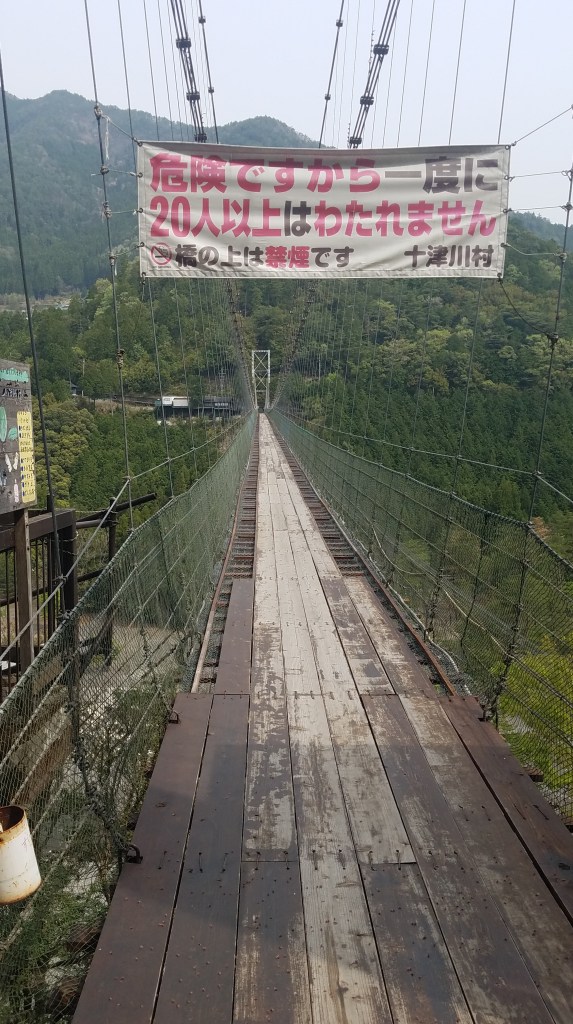
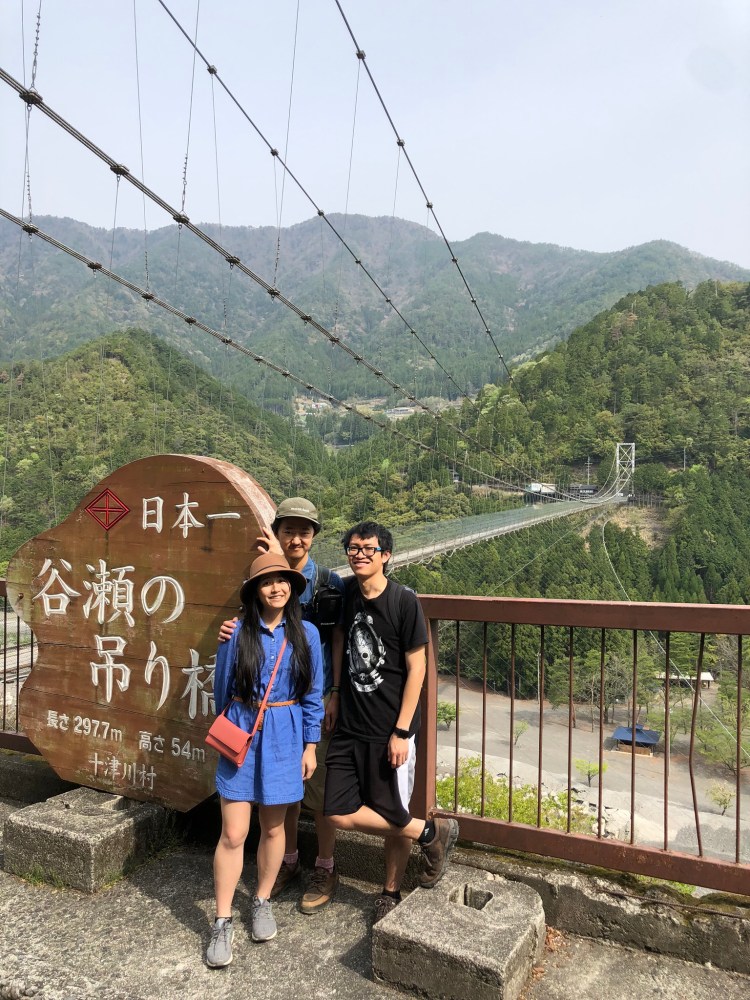
Another hour or so in to the bus ride, we stopped in Uenoji which is home to the Tanize Suspension Bridge. This was a longer stop of 15+ minutes that gave us enough time to check out the bridge. Luckily it was still pretty early in the morning and there weren’t very many people. The sign on the left essentially says that it is dangerous if there are more than 20 people on the bridge at the same time. This was a great confidence booster as we started to cross the bridge. The bridge might look pretty sturdy, however the wooden planks are only connected to adjacent boards vertically. Each time we took a step, the boards swayed a little from side to side causing our knees to buckle. Even if we did lose our balance and fall over, there was mesh netting to catch us and the walls on each side were pretty high. Even so, there were no handrails as we crossed so the entire trip across was a little unnerving. We figured out that a low crouch walk that lowers our center of gravity helped us keep our balance. We were able to walk the full length of the bridge and back. Fun Fact: This bridge is the longest suspension bridge in all of Japan.
We arrived at Gojo Station a few hours later and took the 90 minute train ride to Nara Station via the Wakayama Line.
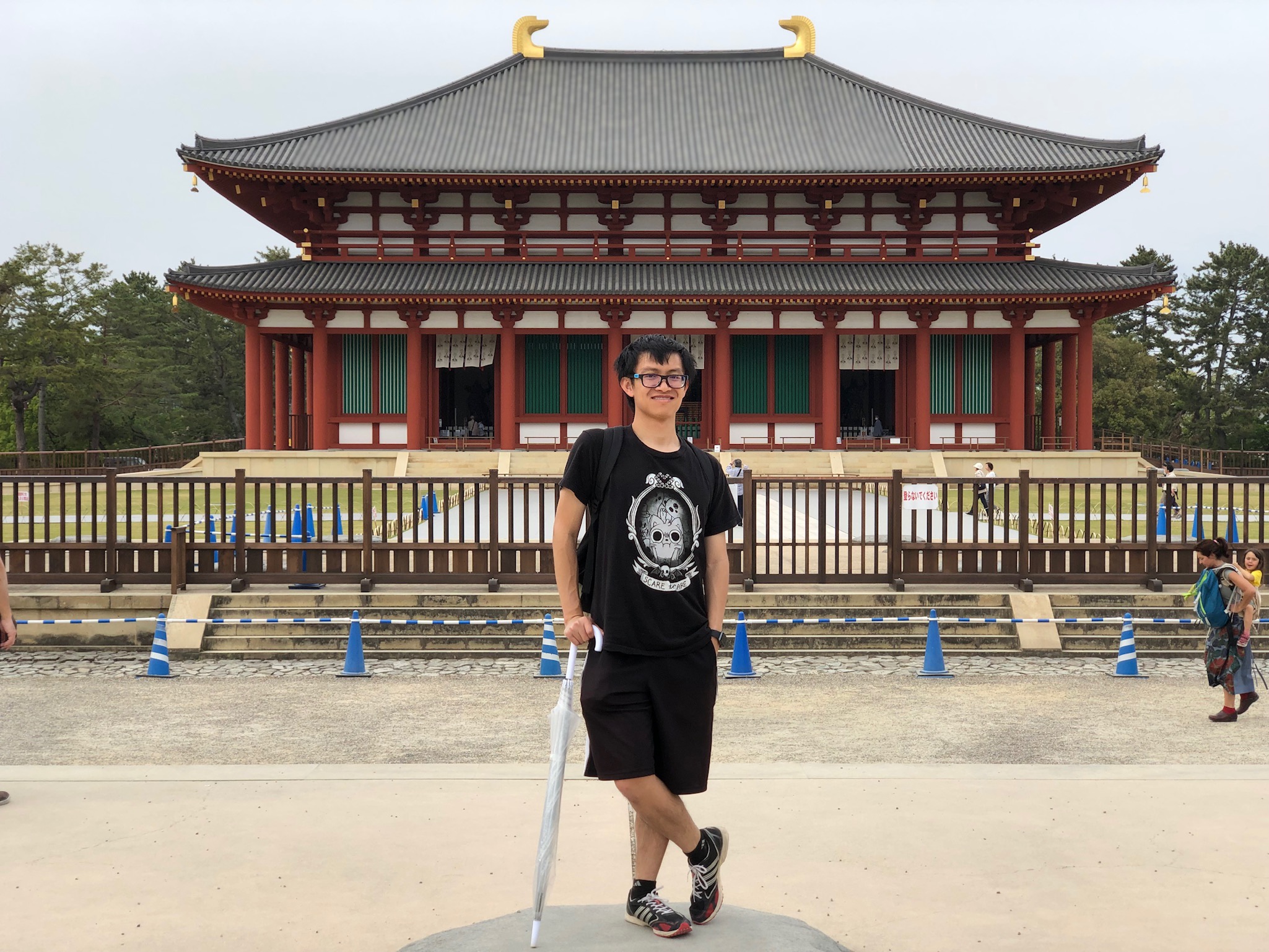

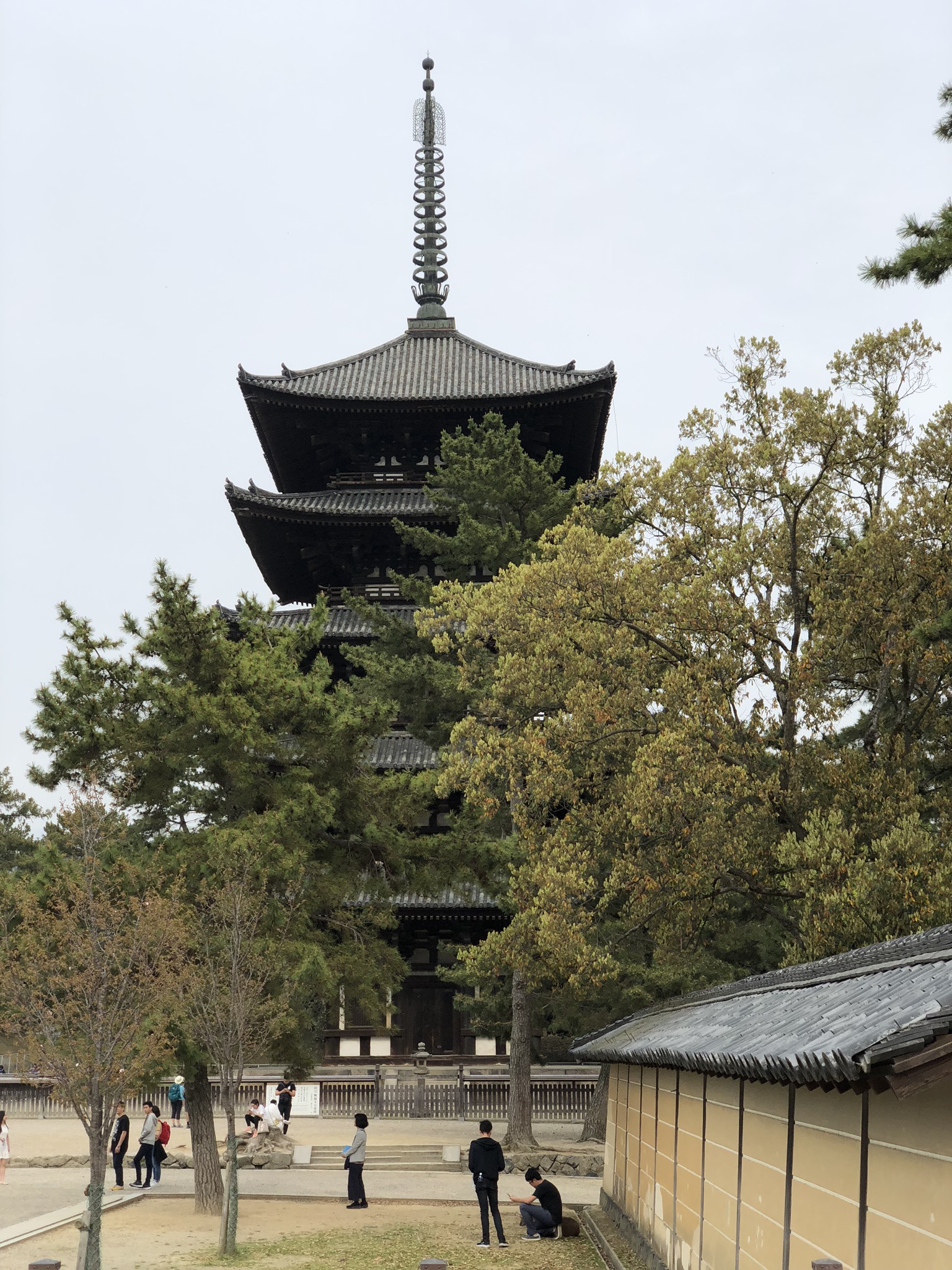
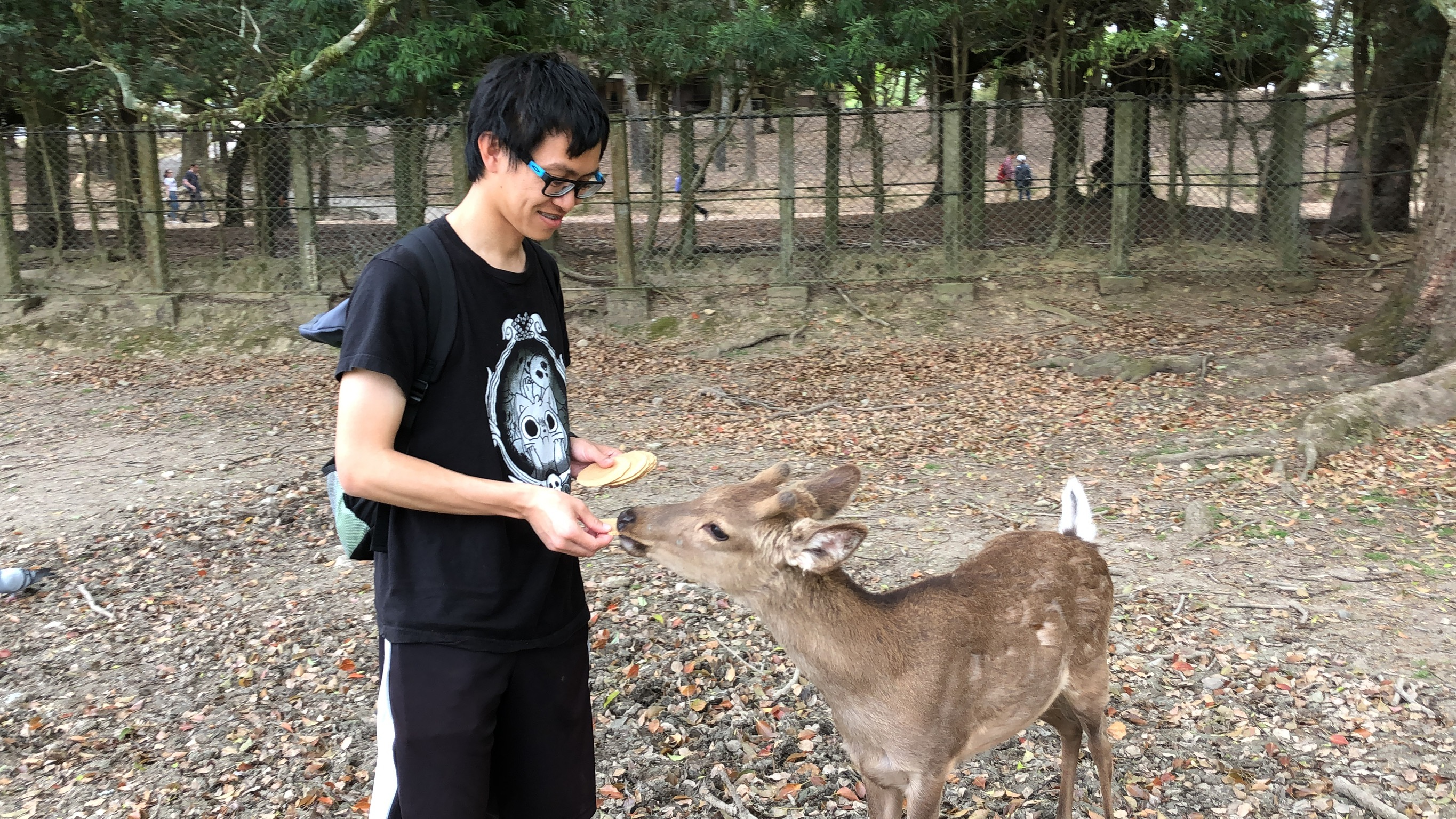

Upon arriving in Nara, we travelled from the station to our lodging for the night at Centurion Hotel Classic Nara (センチュリオンホテルクラシック奈良) which was a short 5 minute walk. We dropped off our bags and enjoyed some nice complimentary refreshments. We made our way to Nara’s famous deer park via Sanjo-Dori, a main street leading to the park. The park itself is just one part of a larger complex that has numerous temples and museums. We could have easily spent multiple days in the area. We bought some biscuits and enjoyed interacting with the deer.
Deer Feeding Strategy: Our deer feeding strategy revolved around locating isolated deer that were either just sitting or standing by themselves. This strategy allowed us some one-on-one time as opposed to being mobbed by a small herd or having to compete for their attention with others. We avoided groups of deer and the deer that camp near the entrance as we found them to be more aggressive. The deer deeper in the park tended to be more mello and easy going. We found a couple of docile ones in a small side park and rewarded their bows with biscuits.
Advice: Avoid large crowds and move deeper into the park before engaging.
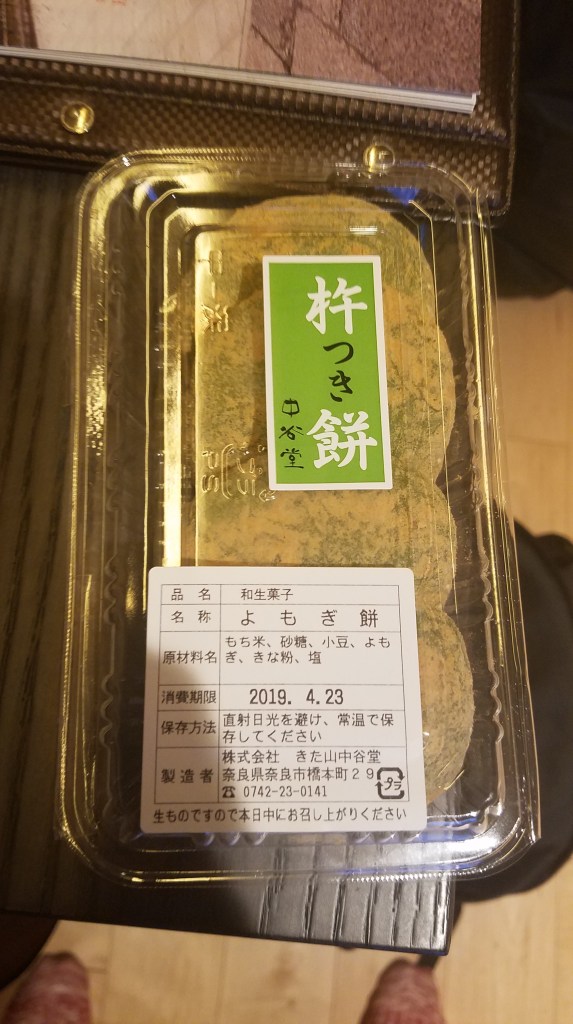
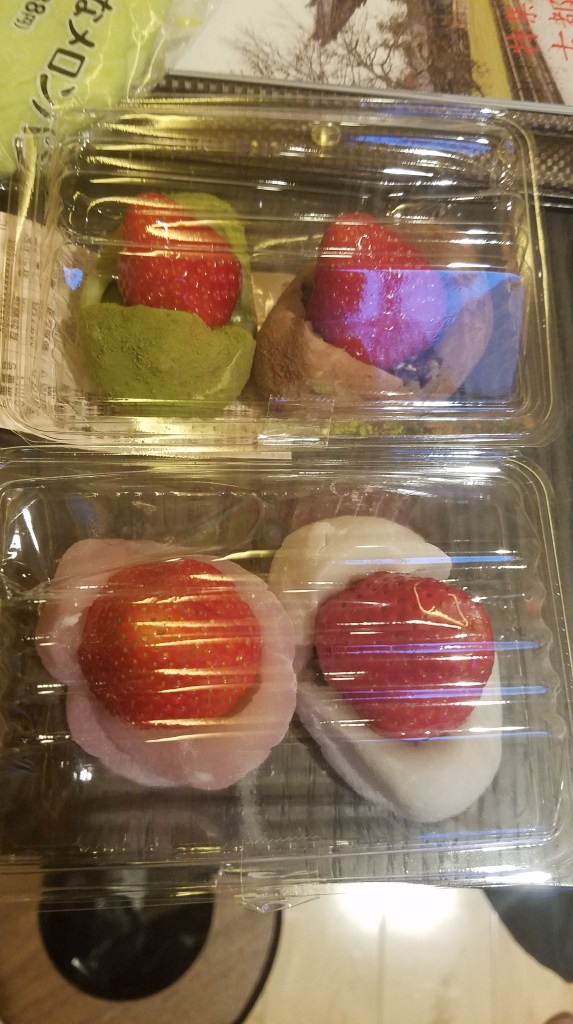
On our way back to the hotel we picked up a couple of sweet treats. The green mochi on the left was purchased at Nakatanidou (中谷堂) which was off the main street of Sanjo-Dori that led to the deer park. They had a live mochi pounding demonstration, so we knew it was fresh. The ones on the right were purchased at Daibutsu Ichigo (大仏いちご) also off of Sanjo-Dori just past the intersection of Yasuragi No Michi (やすらぎの道). The strawberries were super sweet and the combination with the mochi and an/anko were quite delicious. Would definitely get again.
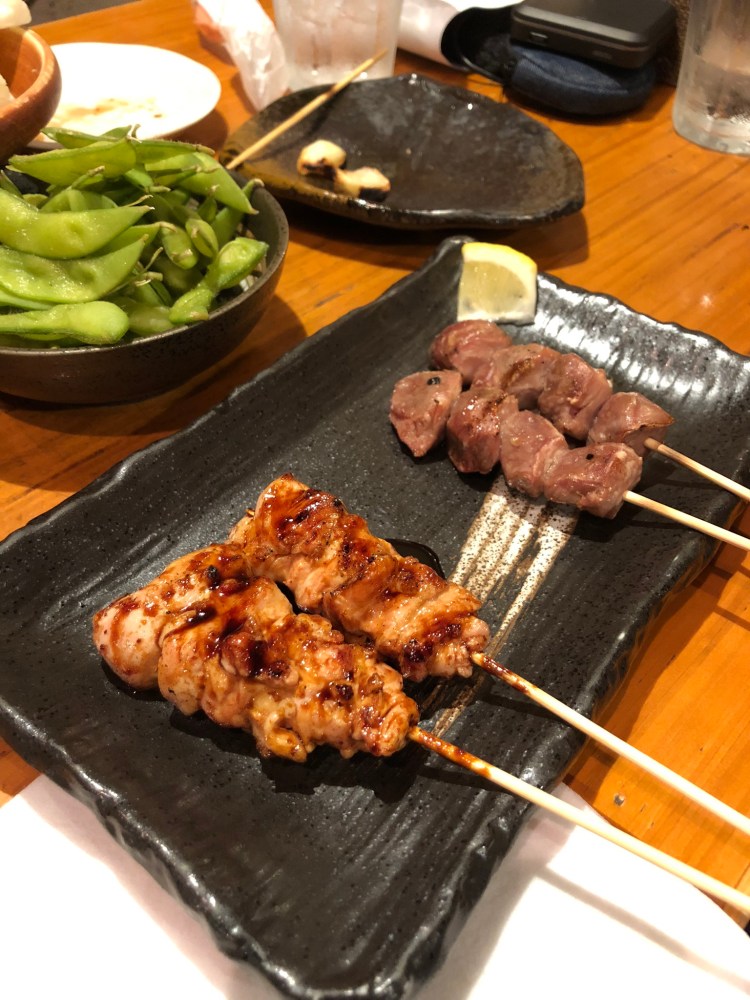
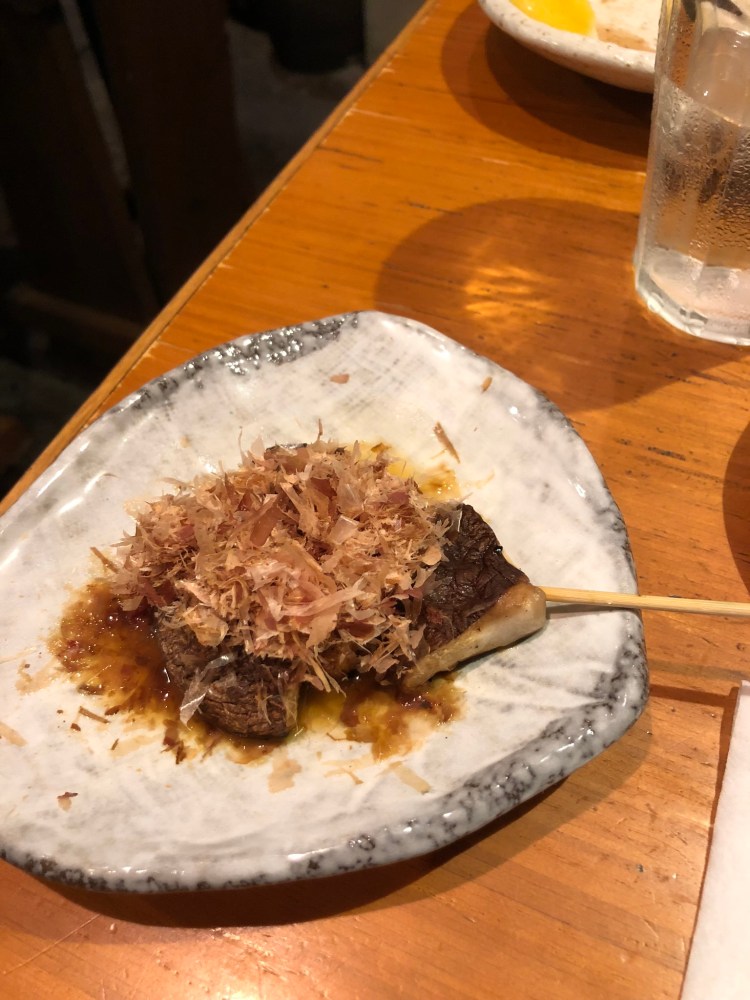
We wrapped up our day with dinner at Niwatori Tamura (鶏田村) a yakitori restaurant between Nara Station and our hotel. We found Momo (もも) or chicken thigh to be the most tender and flavorful in both the sauce and salt variants. After dinner we went back to the hotel and called it a night.
Note: When travelling through Japan we typically stayed at Airbnb’s. For our lodging in Nara, we were having difficulty finding an Airbnb that was close to the station and inexpensive. Our advice is to cross check with local hotels too, we were pleasantly surprised when we found the Centurion Hotel Classic Nara (センチュリオンホテルクラシック奈良) which was both inexpensive and close to the station. In the future, both hotels and Airbnb’s will be on our list of places to stay.
This concludes our Kumano Kodo trip this time. Please look forward to our next adventure!
Budget: (Does not include food/souvenirs)
- Bus from Yunomine Onsen to Gojo Station ¥3,400/person
- Train from Gojo Station to Nara Station ¥990/person
- Lodging at Centurion Hotel Classic Nara (No Meals) ¥2,610/person/night
- Total: ¥7,000/person