About Hitachi Seaside Park
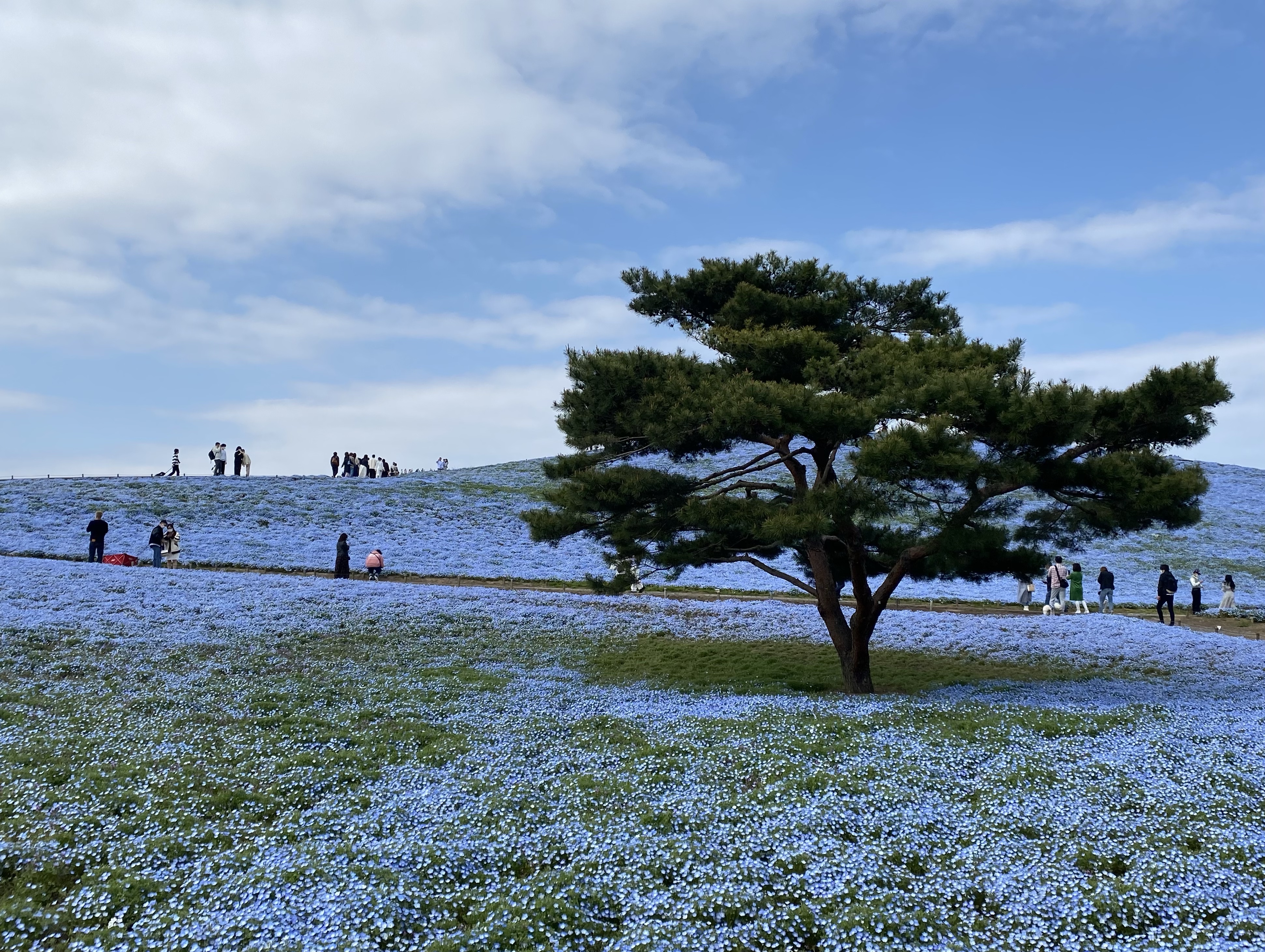
Hitachi Seaside Park is a sprawling 470 acre public park located on the coast of Hitachinaka city in Ibaraki Prefecture. The site of a former military airbase, the area was reclaimed by the city in 1973. Hitachi Seaside Park was born out of the locals desire to create a park that symbolizes peace. Today, the seaside park is best known for its beautiful flowers and annual plantings of Nemophila (Baby Blue Eyes) and Kochia (Summer Cypress). These two events attract lots of visitors and allow guests to enjoy nature.
Hitachi Seaside Park is loosely separated into seven different areas. The main areas to focus on are the Miharashi Area, West Entrance Area, and Pleasure Garden Area.

The Miharashi Area
The Miharashi Area is most known for Miharashi Hill. The hill is covered with annual plantings of Nemophila (Baby Blue Eyes) & Kochia (Summer Cypress). The top of the hill is known for offering outstanding views of the park and Pacific Ocean. Other destinations include Kominka (traditional Japanese style houses), the Sawada Spring Water Nature House, and some Japanese plum trees.
The West Entrance Area
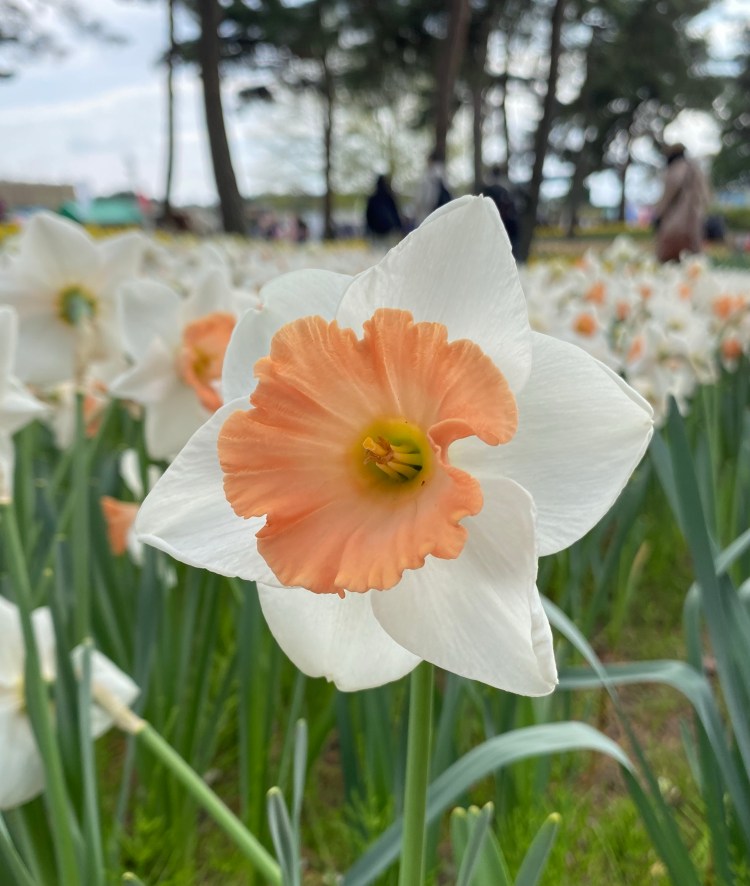
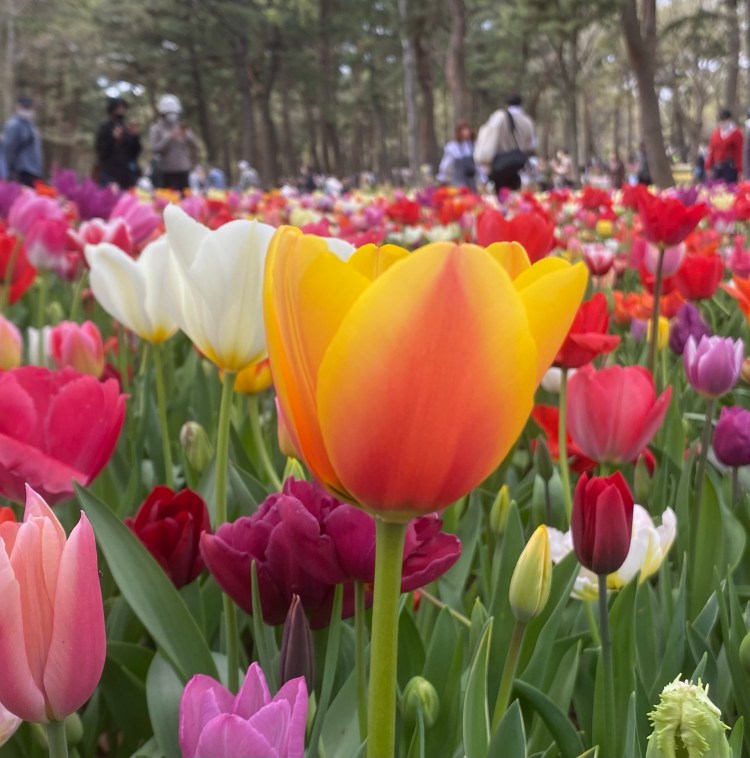
The West Entrance Area includes the Narcissus (Daffodil) Garden and the Tamago no Mori Flower Garden (Tulips). Other areas of interest include the West Lake, various restaurants, Kinen no Mori Rest House, Rekishi (History) Gallery, and Pyon Pyon Tamago (Air Trampoline for Kids).
The Pleasure Garden Area
Located near the Central Gate, the garden is a collection of fun attractions for kids and adults. There is a small amusement park, Family Park Golf Course, Putter Golf Garden, BMX Course, and the Hitachi Rose Garden. Highlights of the small amusement park include a Ferris wheel, a couple of roller coasters, and other carnival type rides.
The Best Times To Visit Hitachi Seaside Park
- Late April: Nemophila & Tulips
- Mid October: Scarlet Red Kochia & Cosmos
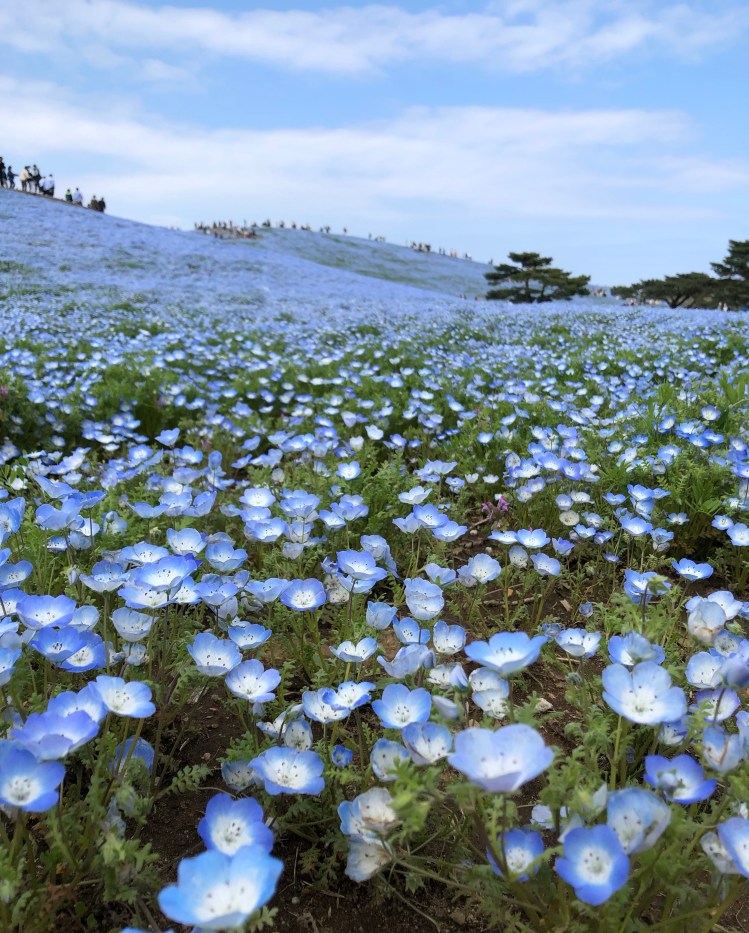
Late April: Nemophila & Tulips
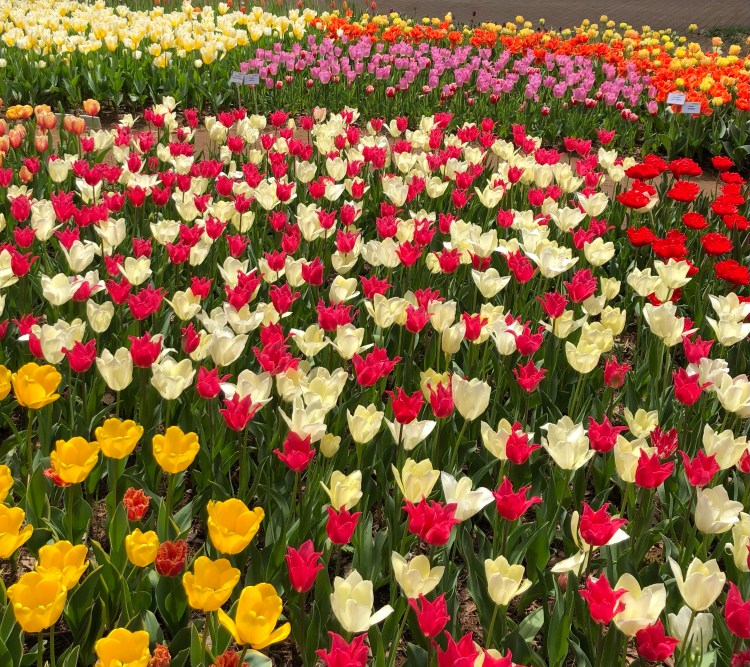
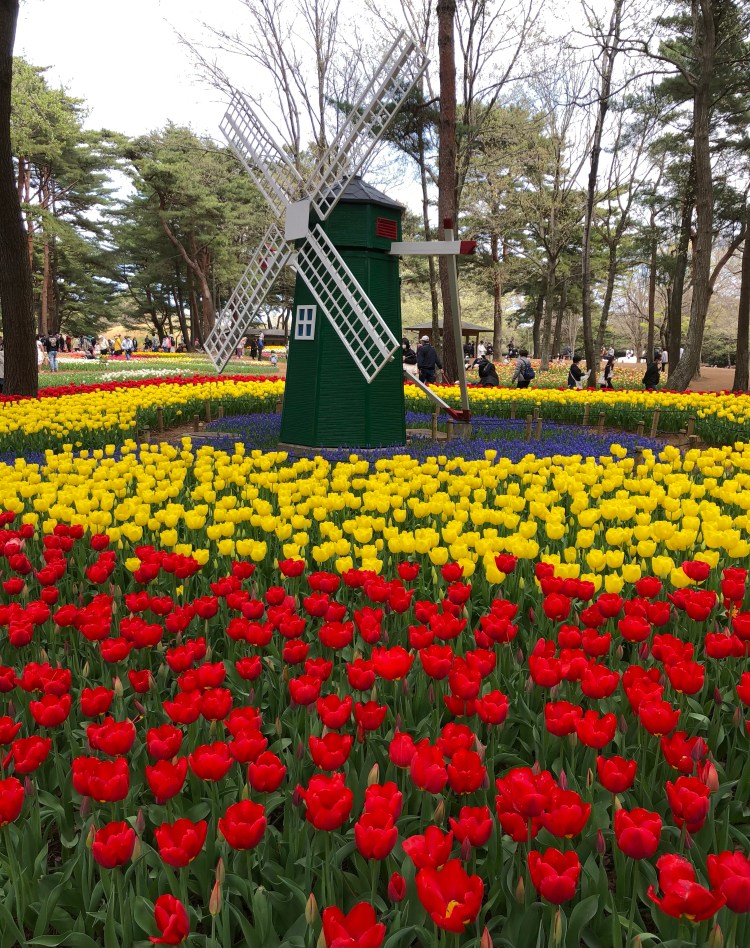
The blooming season for these beautiful flowers lines up in Late April. The blue Nemophila on Miharashi Hill at full bloom are absolutely amazing. The plants themselves are pretty small. To cover such a great area, an unfathomable 5.3 million plants are used. The Tamago no Mori Flower Garden area features a rich complement of 260,000 tulips across 230 varieties. The area is split into a number of large gardens with creative color pairings and designs.

Mid October: Scarlet Red Kochia & Cosmos
The 33,000 Kochia planted in early summer have grown and matured. As autumn approaches the green Kochia transition to a green – red gradient. By the middle of the month, the Kochia have become a vibrant scarlet red color. Around 2 million cosmos flowers are planted in the foreground of Miharashi Hill. Combined, they create one of the best autumn views in Japan.
Unique Reasons to Go to Hitachi Seaside Park
- Top 3 Most Popular Things to Do in Ibaraki Prefecture
- Miharashi Hill Covered in Blue Nemophila at Full Bloom is Breathtaking
- Best Spot in Japan to Enjoy Kochia
Unique Foods to Eat & Where to Get Them
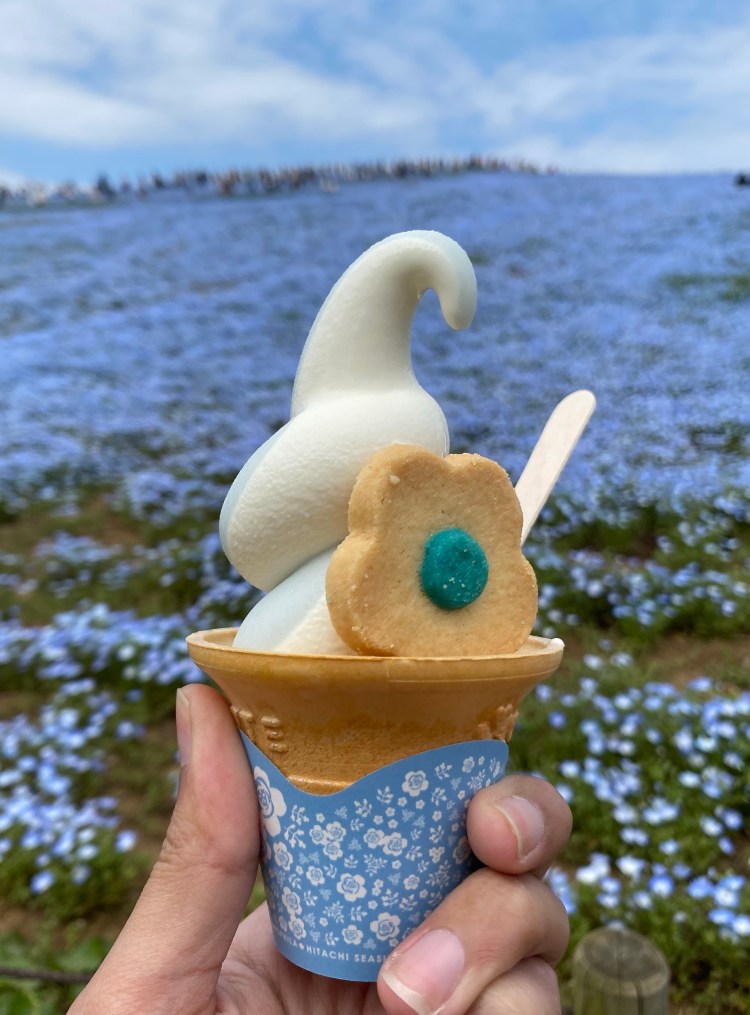
- Blue & White Nemophila Ice Cream from a small building near a public bathroom (only during the Nemophlia season)
- Red & Green Kochia Ice Cream from a small building near a public bathroom (only during the Kochia season)
Getting Around Hitachi Seaside Park
While walking is always an option, we recommend using one of two forms of intra-park transportation. The park is quite vast and walking from one attraction to another can be exhausting.
Cycling
Cycling around Hitachi Seaside Park is an absolute dream. The cycling course includes over 11 km of dedicated cycling paths that make cycling a fun, safe, and convenient way to see the park.
The course is mostly flat and inclines are quite moderate. 10 roundabouts insure travel from one destination to another is seamless. Dedicated bicycle parking lots are located near all the major points of interest. Bicycles can be rented from four cycling centers located near each entrance.
The park allows visitors to bring in their own bicycles. The only stipulation is that bicycles must be walked from the entrance gates to one of the cycling centers before getting on the cycling paths. Cycling trails are free of charge.
Rental bike Fees
Adults
Basic Fee (up to 3 hrs) ~ ¥450
Overtime Fees (every 30 minutes after the initial 3 hrs) ~ ¥70
One Day Bike Rental (not available during peak season) ~ ¥650
Children
Basic Fee (up to 3 hrs) ~ ¥250
Overtime Fees (every 30 minutes after the initial 3 hrs) ~ ¥30
One Day Bike Rental (not available during peak season) ~ ¥350
Electric Bikes
Basic Fee (up to 3 hrs) ~ ¥750
Overtime Fees (every 30 minutes after the initial 3 hrs) ~ ¥140

Seaside Train
Another great intra-park transportation option is the seaside train (a tram designed to look like a train). A reasonably priced ¥600/person ticket grants unlimited rides.
There are a total of 9 stops and it passes the parks most popular spots.
Hitachi Seaside Park Tickets & Hours
Hitachi Seaside Park Tickets
Standard Pricing ¥450/Adult, ¥210/Seniors, Children up to junior high school are free.
Standard Pricing 2-Day Ticket ¥500/Adult, ¥250/Seniors
Seasonal Pricing ¥700/Adult, ¥460/Seniors, Children up to junior high school are free.
Seasonal Pricing ¥1,000/Adult, ¥750/Seniors
Parking Fees/Day ¥520/Car, ¥260/2 Wheeled Vehicle, ¥1,580/Large Vehicles
Hitachi Seaside Park Hours
March 1st – July 20th: 9:30 ~ 17:00
July 21st – August 31st: 9:30 ~ 18:00
September 1st – October 31st: 9:30 ~ 17:00
November 1st – February 28th: 9:30 ~ 16:30
Check here for Holidays
How To Access Hitachi Seaside Park
By Public Transportation
- From Tokyo (Ueno Station) take a Ueno-Tokyo Line train bound for Takahagi getting off at Katsuta Station or a Ueno-Tokyo Line train bound for Tsuchiura transferring at Tsuchiura Station to a JR Joban Line train bound for Katsuta getting off at Katsuta Station *Least Expensive (2 hours 20 minutes, ¥2,310 one way per person) Note: JR Pass Compatible
- From Tokyo (Ueno Station) take a JR Hitachi & Tokiwa Limited Express bound for Katsuta Station. *Quickest (1 hour 15 minutes, ¥3,890 one way per person) Note: JR Pass Compatible
- From Katsuta Station head towards the east exit bus area: Bus Stop #2 (Ibaraki Transportation) get off at “Kaihin Koen West Gate” (海浜公園西口)*Special non-stop bus to the West Gate (operated only during Spring/Autumn Peak Seasons)
- From Katsuta Station take a Hitachinaka Seaside Railway train bound for Ajigaura Station. (28 minutes, ¥570 one way per person) (2km to South Entrance, 25 minute walk)
By Car
- Hitachi Seaside Park IC (500m South)
- Hitachinaka IC (3.5 km Southwest)
Best Hitachi Seaside Park Parking Lots
- West Parking Lot (2,000 Spaces, 400m from West Entrance, Best for West Entrance, Parking Fee ¥520/Vehicle)
- South Parking Lot (2,000 Spaces, 100m from Central Entrance, Best for Central Entrance, Parking Fee ¥520/Vehicle)
- Seabreeze Parking Lot (350 Spaces, 200m from Seabreeze Parking Lot, Best for Seabreeze Entrance, Parking Fee ¥520/Vehicle)
- #1 Overflow Parking Lot (“A lot” of Spaces, 500m from West Entrance, Best for West Entrance) *Only open during peak seasons.
- #2 Overflow Parking Lot (“A lot” of Spaces, 400m from West Entrance, Best for West Entrance) *Only open during peak seasons.
6 thoughts on “Best Times To Visit Hitachi Seaside Park”