
Table of Contents
- About Ashikaga Flower Park
- Best Times To Visit Ashikaga Flower Park
- Unique Reasons to Go to Ashikaga Flower Park
About Ashikaga Flower Park (あしか が フラワー パーク)
The park was originally called Hayakawa Farm when it opened in 1968. Due to urban development, the park was moved to its current location in Ashikaga city, Tochigi Prefecture in 1997. The park was renamed Ashikaga Flower Park. The park area was formerly a wetland, over 250 tons of charcoal was used to purify the land. Today, the park has expanded to a size of 100,000 square meters. The park was the only destination in Japan to be selected as one of CNN’s “Dream Destinations” in 2014.
Ashikaga Flower Park is a true year round attraction in Japan. The park has done a wonderful job curating a beautiful collection of seasonal flowers. The park separates time into 8 distinct themes. Each of the unique themes has their own charm and they incorporate hundreds to thousands of plants.
- Heralding Spring: Early January – Late February
- The Spring Flower Festival: Early March – Mid April
- Wisteria Story: Mid April – Mid May
- Rainbow Garden: Mid May – Early June
- Blue & White Garden: Early June – Early July
- Water Nymphs: Early July – Late September
- Purple Garden: Early October – Late November
- Bejeweled Flower Garden: Late October – Late January
While Ashikaga Flower Park can be visited year round, we recommend visiting during these times.

Best Times To Visit Ashikaga Flower Park
- Early March – Mid April: Tulips & Cherry Blossoms (The Spring Flower Festival)
- Mid April – Mid May: Wisteria, Azalea, & Rhododendron (Wisteria Story)
- Mid October – Mid February: Winter Illumination (Bejeweled Flower Garden)

Early March – Mid April: Tulips & Cherry Blossoms
The arrival of spring is marked by a colorful assortment of 30,000 tulips. The garden is awash with traditional planting arrangements that create wonderful patterns. Later in the month sees snow willows and cherry blossoms come into full bloom.
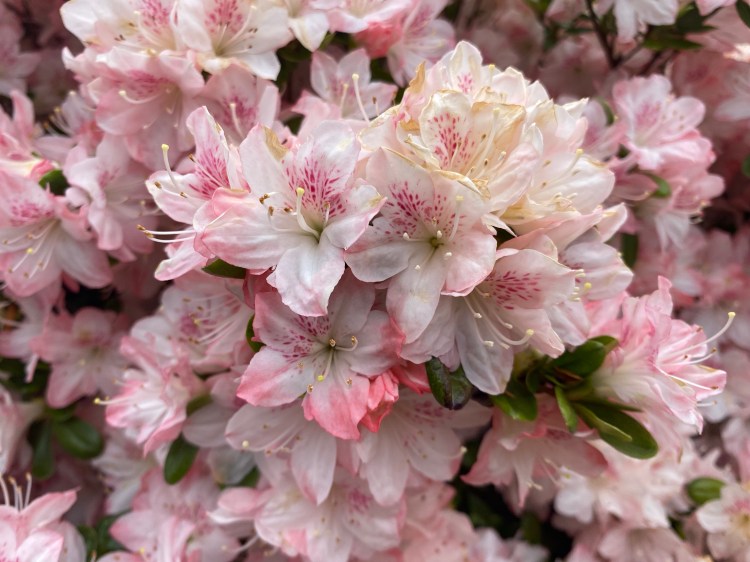
Mid April – Mid May: Wisteria, Azalea, & Rhododendron
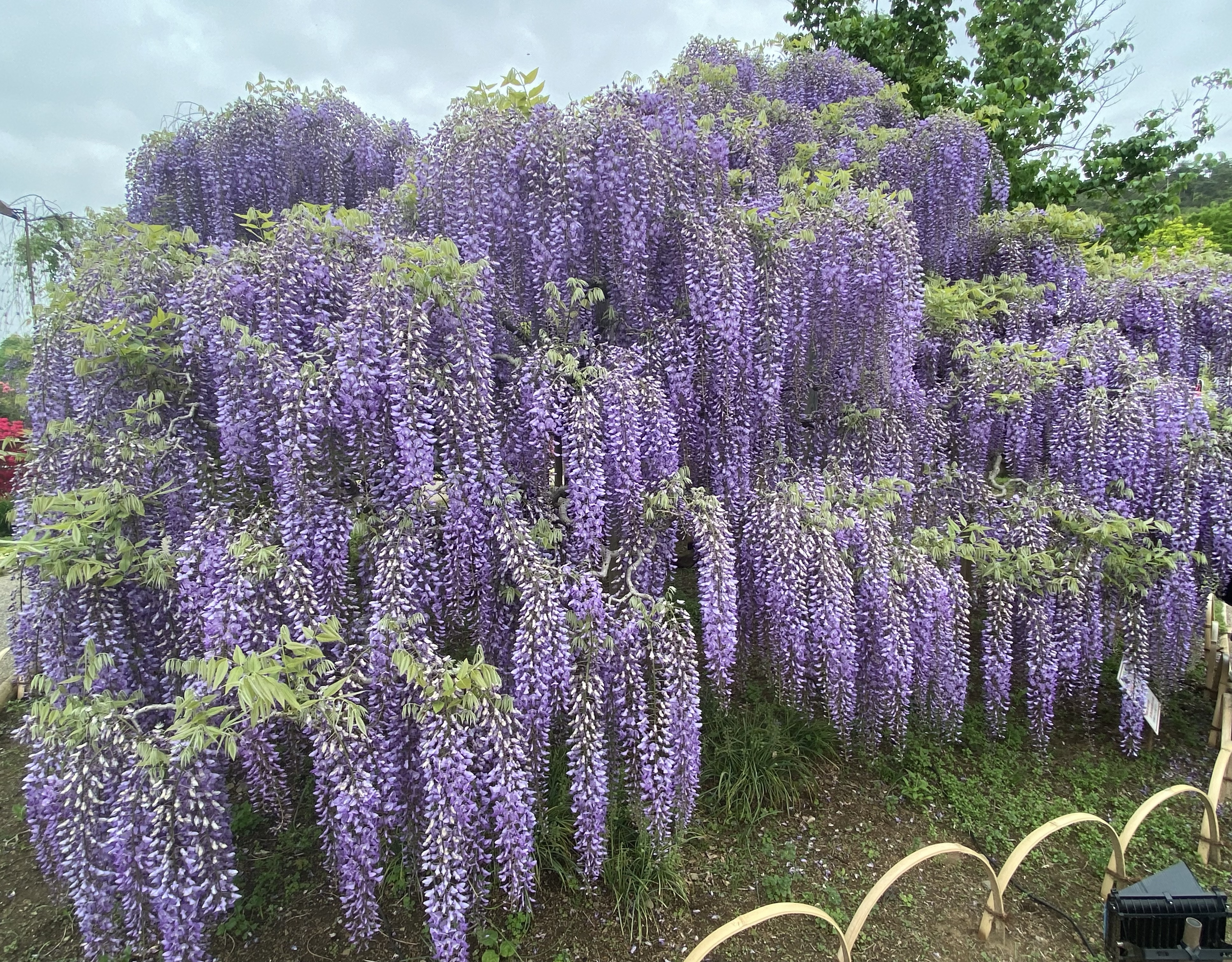
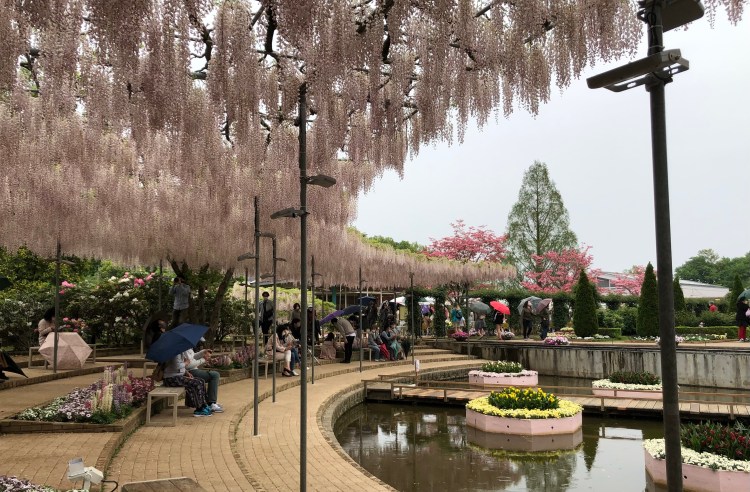
Ashikaga Flower Park Wisteria are the crown jewel of the park. The most popular event is the Great Wisteria Festival held from April 12th to May 21st. During this time large crowds gather to view the wisteria trees in the various stages of bloom.
- Mid April – Late April: Usubeni-Fuji (light pink wisteria flowers)
- Late April – Early May: “Great Wisteria” (central wisteria tree)
- Early May: Shiro-Fuji (white wisteria flowers)
- Early May – Mid May: Kibana-Fuji (yellow wisteria flowers)
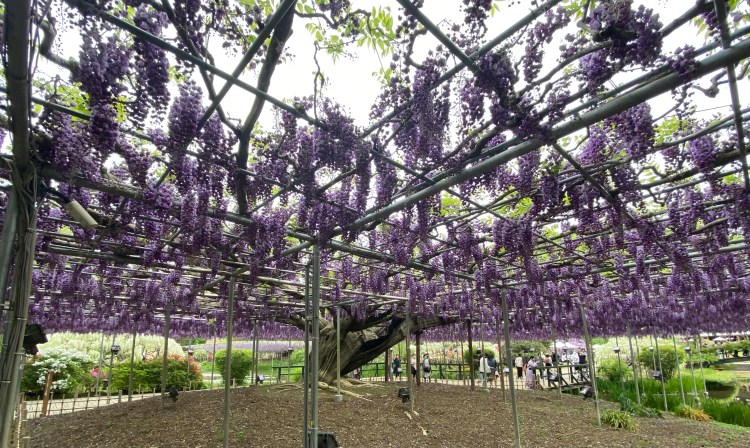
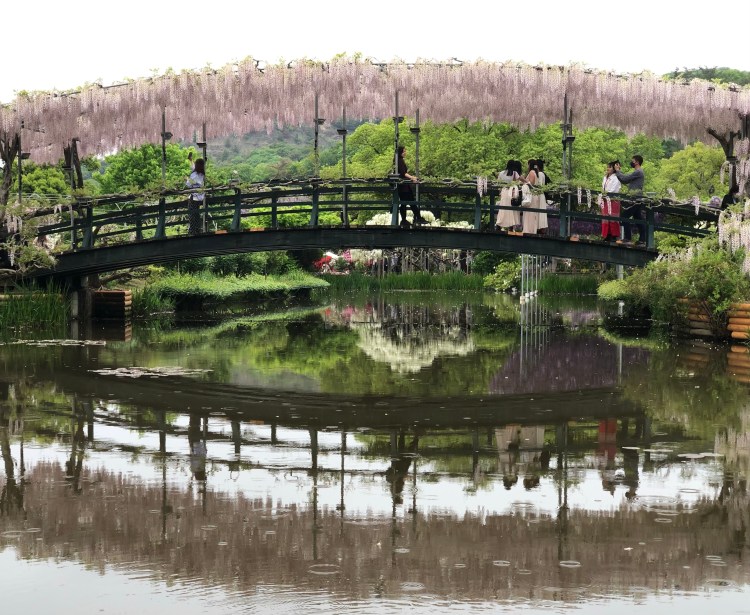
The key attractions of the Great Wisteria Festival are the three O-Fuji (great wisteria trees) that are 160 years old and have spread out over 1,000 square meters, the Shiro-Fuji Tunnel (long tunnel of white wisteria), the Kibana-Fuji Tunnel (yellow kibana wisteria tunnel), and the Usubeni-Fuji Bridge (light pink wisteria flowers hanging over a bridge). Other flowers include azaleas and rhododendrons.
Mid October – Mid February: Winter Illumination

The Winter Illuminations are magical. The entire park lights up at night to showcase the major floral highlights from throughout the year. The highlights of the illuminations are the flower castle, the great wisteria, the illumination tower, light rose garden, and the white and yellow wisteria tunnels.
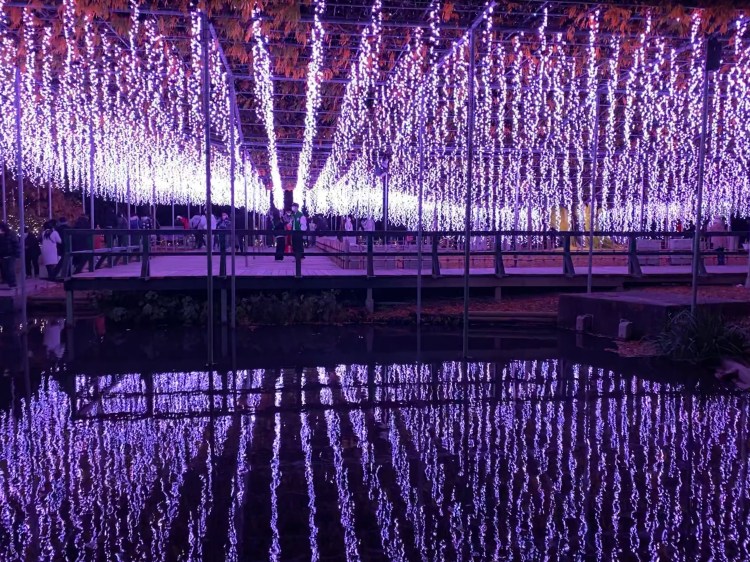
The park recreates all of the wisteria through an intricate system of supports and lights. Most visitors are impressed with the scale and depth of the illuminations. Under the great wisteria is a truly immersive experience with 360 degrees of beautiful purple string lights. The combination of timed lighting patterns with subtle music is truly a sight to behold.
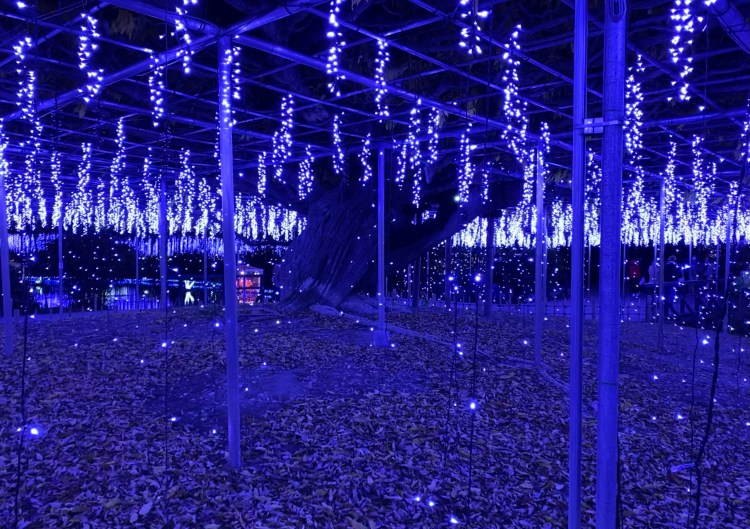
In addition, the theme of the illumination changes a total of three times:
- Late October – Mid November: Lights & Amethyst Sage
- Late November – Late December: Christmas Fantasy
- New Year’s Day – Mid February: Light & Winter Peony Blooming Show
The result is a beautiful night view that can be visited multiple times.
Unique Reasons to Go to Ashikaga Flower Park
- Top 3 Major Illumination Spot in the Kanto Region
- Top 3 Most Popular Things to Do in Tochigi Prefecture
- Named a Top “Dream Destination” by CNN in 2014
- The Great Wisteria Trees in Full Bloom are Breathtaking

Unique Foods to Eat & Where to Get Them
- Wisteria Soft Serve Ice Cream from Japanese Restaurant Hydrangea (和食処あじさい)
- Wisteria Smoothie from Japanese Restaurant Hydrangea (和食処あじさい)
- Wisteria Cream Soda from Wisteria (ウェステリア)
- Sano Ramen from The Food Terrace (nearby town of Sano is famous for their shoyu ramen)
- Sano Specialty Fried Potatoes from The Food Terrace (nearby town of Sano is famous for their fried potatoes)
Admission Fee & Hours
Ashikaga Flower Park Admission Fee
January 1st – March 31st: ¥400 ~ ¥900/Adult, ¥200 ~ ¥500/Child
April 1st – May 31st: ¥800 ~ ¥2,100/Adult, ¥400 ~ ¥1,100/Child
June 1st – June 30th: ¥800 ~ ¥1,300/Adult, ¥400 ~ ¥700/Child
July 1st – December 30th (Daytime): ¥400 ~ ¥800/Adult, ¥200 ~ ¥400/Child
October 18th – February 14th (Evening): ¥1,300/Adult, ¥700/Child
*Prices Vary Depending on How Flowers Bloom.
*Separate Evening Ticket Required for Illumination
Check here for Todays Entrance Fee
Ashikaga Flower Park Hours
Normal Season: 10:00 ~ 17:00
Fuji no Hana Story
April 15th – May 14th:
Light Flower Garden
October 18th – February 14th: 13:30 ~ 21:00 (weekday) 13:30 ~ 21:30 (weekend & holiday) *illumination starts 16:30
Check here for Holidays

How To Access Ashikaga Flower Park
By Public Transportation
- From Central Tokyo (Ueno Station) take a Hibiya Line train bound for Kita-Kasukabe transferring at Kitasenju Station to a Nikko-Kinugawa Line Limited Express train bound for Kinugawa Onsen transferring at Tochigi Station to a JR Ryomo Line train bound for Takasaki getting off at Ashikaga Flower Park Station. *Least Expensive (1 hours 38 minutes, ¥2,758 one way per person) Note: Partial JR Pass Compatible (Nikko-Kinugawa Line not included).
- From Central Tokyo (Tokyo Station) take a Tohoku-Hokkaido Shinkansen bound for Sendai transferring at Oyama Station to a JR Ryomo Line train bound for Takasaki getting off at Ashikaga Flower Park Station. *Quickest (1 hour 24 minutes, ¥4,790 one way per person) Note: JR Pass Compatible, Reservation for the Shinkansen Required.
- From Ashikaga Flower Park Station (170m to West Entrance, 2 minute walk)
By Car
- Ashikaga IC (9 km Northwest)
- Izuruhara IC (8.5 km Northeast)
- Sano Smart IC (10.3 km East)
*Parking is Free (~6,000 Parking Spaces Available)